




The Georgian Issue 1, 2025
The Georgian, the magazine of the Georgian Group (Issue 1, 2025), continues to highlight the important issue of what should constitute an appropriate approach to the repairs following the disastrous fire that swept through the National Trust’s country house Clandon Park in 2015, and whether (at the time of writing) the secretary of state will call in the controversial scheme for a public inquiry. The Georgians considered the initial approach to reinstatement and repair to be flawed, and they continue to maintain that the scheme is both harmful and intrusive. They illustrate the coverage of the issue in national media. An inquiry would be invaluable, not least in exploring the wider issues of the underpinning philosophy of repair.
Each issue devotes an impressive amount of space to statutory casework (19 pages in this issue) demonstrating the importance of authoritative expert advice to local planning authorities set out in paragraphs 207 and 208 of the NPPF, and the importance of the statutory casework grant in the light of the government’s review of the statutory consultee system.
Also of interest is an article by Nigel Hankin on ‘Turban Domes and Lofty Pinnacles’. Hankin addresses the Indian influences on late-Georgian buildings beyond the most obvious example of the Royal Pavilion, Brighton. Such influences were driven by Thomas Daniell (1749–1840) and his nephew William (1769–1837), who both travelled extensively in India between 1786 and 1793. The Daniells’ influence can be seen particularly at Sezincote, Gloucestershire, designed by Samuel Cockerill for his brother Charles in 1798.
Simon Bradley flags up the significance of Georgian buildings at the start of the Rail200 bi-centenary celebration of the railway age, noting that these should not be overlooked in what is seen as a quintessentially Victorian innovation.
This issue continues the long-running series of articles by Charles Brookings on the design and development of Georgian and Regency architectural details, currently door hinges. Twenty-two examples are clearly illustrated and described for their value as dating evidence. The author notes that, when undertaking refurbishment, it is worth taking advice on the date and condition of any surviving hinges, and the possibility of their repair and reuse rather than wholesale replacement.
This article originally appeared in the Institute of Historic Building Conservation’s (IHBC’s) Context 184, published in September 2025.
--Institute of Historic Building Conservation
Related articles on Designing Buildings Conservation.
IHBC NewsBlog
IHBC sponsors Gardens Trust event 23-4 Sept 2026
.jpeg)
'Learning from the Past, Shaping the Future’ takes place in Milton Keynes
Renovations to Frank Lloyd Wright's Fallingwater complete
.jpg)
World Heritage Preserved project opens house for tours again
Shakespeare Birthplace Trust places Hall's Croft on HAR Register
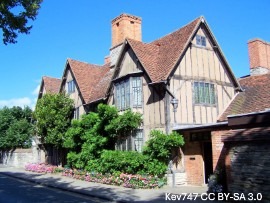
Stratford-upon-Avon home of Shakespeare's daughter is 'At Risk'
Lady Grange’s House repaired on St Kilda
.jpg)
National Trust for Scotland repairs stone cleit with link to famous island resident
Griff Rhys Jones on BBC Radio 4 Today programme
,_Green_Lane,_Derby.jpg)
The Victorian Society’s President unveiled its latest Top Ten Endangered Buildings 2026.
Need a MATE? Book your place now.
IHBC offers free webinars on applying for IHBC accreditation (Full & Associate).
UK Stained Glass Repository finds windows new homes
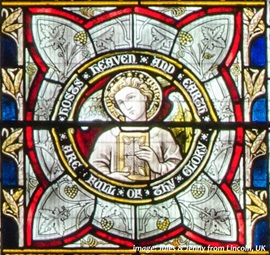
How are stained glass windows are rescued, stored and repurposed?
APPGEBE report sets high aims for quality
'Government must not sacrifice quality in drive to build 1.5m homes'
New measures protect Historic Shipwrecks from heritage crime

Underwater cultural heritage benefits from new HE guidance
How could the City of London skyline look in 6 years' time?

Visualisation shows approved planning applications as completed buildings
National Trust for Scotland calls for VAT cuts
Heritage neglect is encouraged by current policies
IHBC's 'Context' Issue 186 features Industrial Heritage
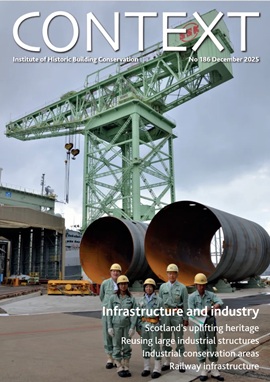
IHBC's members' journal reports on the challenges of conserving infrastructure
Book now for IHBC Annual School 2026
IHBC Annual School is taking place 18-20 June 2026 in Newcastle
RICHeS Research Infrastructure offers ‘Full Access Fund Call’
RICHeS offers a ‘Help’ webinar on 11 March
Latest IHBC Issue of Context features Roofing
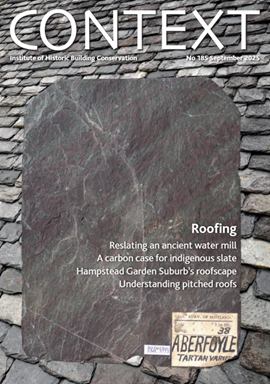
Articles range from slate to pitched roofs, and carbon impact to solar generation to roofscapes
Three reasons not to demolish Edinburgh’s Argyle House

Should 'Edinburgh's ugliest building' be saved?
IHBC’s 2025 Parliamentary Briefing...from Crafts in Crisis to Rubbish Retrofit
IHBC launches research-led ‘5 Commitments to Help Heritage Skills in Conservation’
How RDSAP 10.2 impacts EPC assessments in traditional buildings

Energy performance certificates (EPCs) tell us how energy efficient our buildings are, but the way these certificates are generated has changed.